Organoid-Ready Functional Antibodies, Built for Translational Fidelity
Antibodies for organoids are functional antibodies optimized for use in 3D organoid models, where reagent purity and consistency are critical. Bio X Cell antibodies for organoids deliver in vivo-grade purity to human-relevant 3D models, with ultrapure, carrier-free formulations and tightly controlled endotoxin levels to prevent cytokine noise, off-target activation, and cytotoxic artifacts. Our functional antibodies support a mouse → human organoid → mouse translational workflow, enabling consistent biology across in vivo models and advanced 3D systems without reformulation.
Carrier free antibodies with tightly controlled endotoxin levels reduce off-target effects and prevent cytokine events, ensuring reproducibility across experiments.
Functional Antibodies in Real Organoid Workflows
Organoid models introduce new complexity into experimental design, especially when immune cells, checkpoint pathways, or cytokine signaling are involved. See how researchers use Bio X Cell antibodies for organoids to preserve biological signal integrity across in vivo and organoid systems.
Modeling the Tumor–Immune Interface in Pancreatic Cancer
Publication Date: 21 January 2026
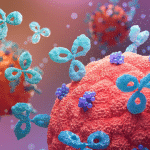
Pancreatic ductal adenocarcinoma (PDAC) remains highly resistant to immune checkpoint therapy, even in tumors expressing PD-L1, highlighting critical gaps in how tumor–immune interactions are modeled and interpreted. In this case study, researchers applied a translational workflow combining orthotopic murine models with matched human and murine organoid–immune co-cultures to more faithfully capture the immunosuppressive tumor microenvironment. Using physiologically relevant systems and in vivo–validated antibodies for organoids from Bio X Cell, the study illustrates why checkpoint blockade alone often underperforms in PDAC and underscores the value of advanced co-culture models for prioritizing immune-modulatory strategies before clinical testing.
Organotypic Tumor Slices Bridge the Gap Between Tumor Complexity and Therapeutic Testing
Publication Date: 4 February 2026
Organotypic tumor slice cultures preserve native tumor architecture and immune context, offering a more faithful window into tumor–immune interactions than conventional in vitro models. In this overview, we examine how tumor slices enable functional evaluation of immune checkpoint blockade, cytokine signaling, and cell–cell crosstalk in a physiologically relevant ex vivo system. By pairing these sensitive models with ultra-pure, in vivo-validated antibodies from Bio X Cell, researchers can minimize assay artifacts and generate data that better reflect true immuno-oncology biology, improving translational confidence before advancing toin vivo or clinical studies.
Modeling Tissue-Resident Lymphocyte–Stem Cell Interactions in Chronic Lung Disease
Publication Date: 9 February 2026
Chronic inflammatory signaling is increasingly recognized as a driver of tissue degeneration in pulmonary disease, but the mechanisms linking immune activation to stem cell loss have remained difficult to resolve. In this review, we highlight how human lung organoids reveal a direct role for IFN-γ–driven immune signaling in depleting epithelial stem cell populations associated with emphysema. By modeling immune–epithelial interactions in a physiologically relevant 3D system, researchers can uncover disease-relevant biology that is often masked in conventional in vitro assays. When paired with antibodies from Bio X Cell, these sensitive organoid models minimize cytokine artifacts and preserve true pathway biology.
Modeling Germinal Center Epigenetics with Immune Organoid Platforms
Publication Date: 10 February 2026
Germinal center biology underpins antibody affinity maturation and immune memory, yet these processes are difficult to dissect in vivo due to architectural and microenvironmental complexity. In this review, we highlight how engineered immune organoids recreate key lymph node features, enabling controlled analysis of germinal center differentiation, epigenetic regulation, and antigen presentation. When paired with antibodies from Bio X Cell, these systems support precise modulation of pathways such as CD40–CD40L signaling while minimizing assay artifacts, delivering insights that are more predictive for translational antibody and vaccine development.
Insights on Functional Antibodies for Complex Biological Systems
Discover insights exploring organoid and organ-on-chip research, with a focus on preserving biological fidelity in complex 3D systems. Our articles examine how ultra-pure, low-endotoxin functional antibodies help minimize artifacts and enable meaningful translational outcomes.
Tools for the Next Generation of Therapeutic Research
Publication Date: 16 June 2025
Next-generation therapeutic research is rapidly shifting toward human-relevant models and New Approach Methodologies (NAMs) such as organoids, organ-on-chip systems, and advanced in vitro platforms. These models offer improved physiological relevance and predictive power but only when paired with reagents that meet the same biological standards. In this perspective, Bio X Cell explores how in vivo-ready, ultrapure, low-endotoxin functional antibodies for organoids are uniquely positioned to support NAM workflows by minimizing cytokine artifacts, preserving true biology, and enabling reproducible data across in vitro, ex vivo, and in vivo systems. By aligning reagent quality with model complexity, researchers can generate data that translates more reliably from discovery to therapeutic development.
Advancing Organoid Research: Current Insights, Challenges, and the Path Forward
Publication Date: 2 January 2026
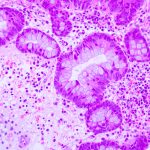
Organoid systems have rapidly evolved from experimental curiosities into core translational research platforms that capture key aspects of human tissue architecture, cellular diversity, and dynamic signaling that are irreproducible in 2D cultures and often elusive in animal models. Expert insights featured in Advancing Organoid Research highlight how increased biological complexity, including immune-integrated and multi-lineage co-culture systems, expands the scientific questions organoids can address, while also amplifying sensitivity to technical variables that can confound results. As these models mature, reproducibility and reagent quality become paramount, since trace contaminants like endotoxin or carrier proteins can trigger unintended responses in sensitive 3D environments. High-quality, in vivo-grade functional antibodies for organoids with ultrapure, carrier-free formulations and low endotoxin are essential for minimizing experimental noise and preserving true biology, enabling organoid data that confidently informs translational decisions.
Expert Videos on Functional Antibodies in 3D Systems
Discover expert-led webinars exploring organoid and organ-on-chip research, with a focus on preserving biological fidelity in complex 3D systems. These on-demand videos feature scientific discussions on how ultra-pure, low-endotoxin functional antibodies for organoids help minimize artifacts and support meaningful translational outcomes.
Beyond the Dish: Unlocking Tumor Microenvironment Biology with 3D Tissue Models and Antibody-Based Strategies
Publication Date: 03 September 2026
Advanced 3D tumor models are revealing critical tumor microenvironment (TME) signals that conventional approaches can miss, creating new opportunities to identify therapeutic vulnerabilities and antibody targets. In this on-demand webinar, experts explore how 3D microtumor platforms and machine learning-driven screening uncovered a p38-dependent tumor–CAF–ECM signaling circuit, identified a noncanonical DDR1/2–p38–GLI1 axis in cancer-associated fibroblasts, and demonstrated how kinase inhibition combined with anti-PD-L1 can enhance CD8⁺ T cell infiltration. The webinar also provides a practical framework for selecting research-grade antibodies for organoid and 3D tumor model workflows.
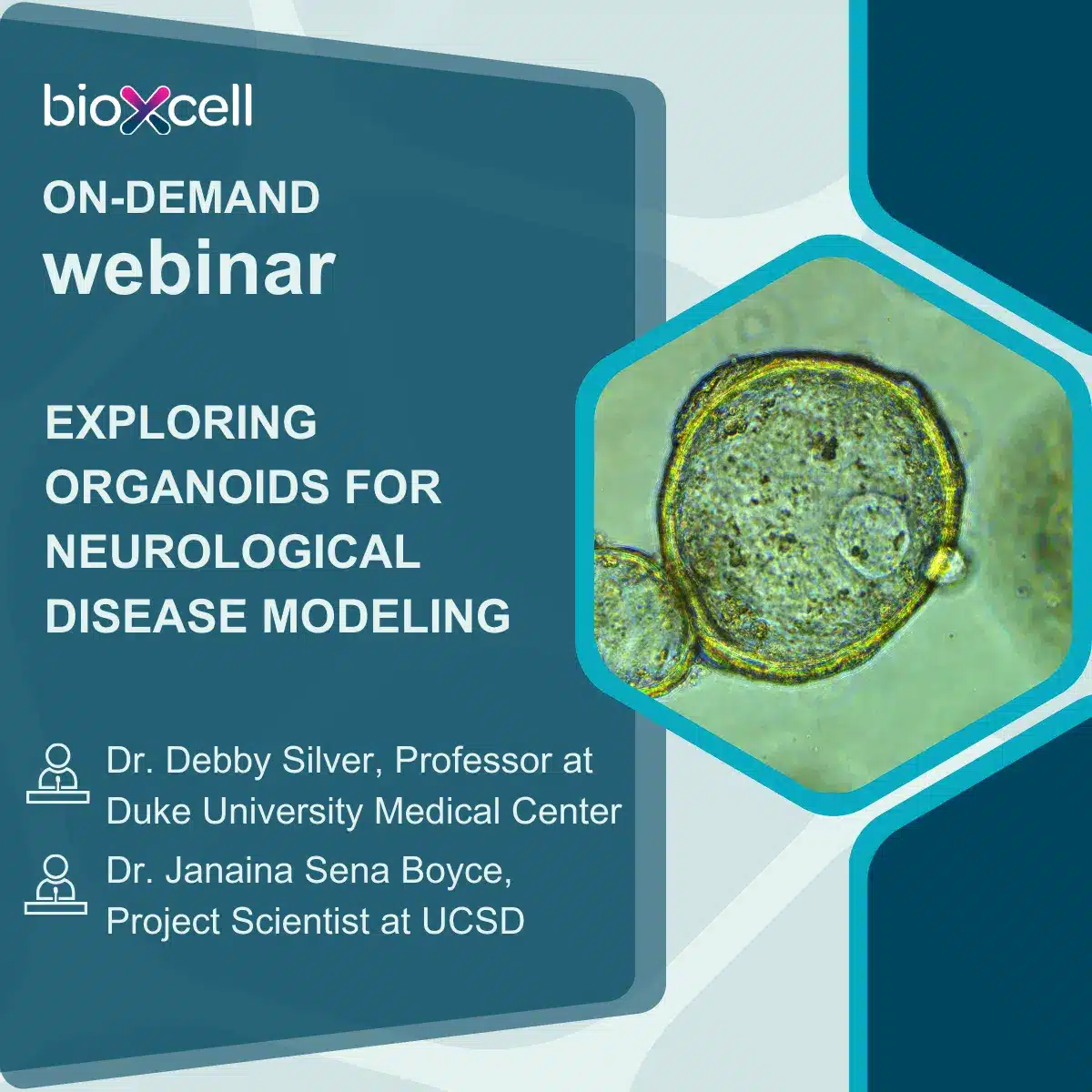
Exploring Organoids for Neurological Disease Modeling
Publication Date: 19 December 2025
Brain organoids are transforming how researchers study human brain development, neurological disease, and emerging therapeutic strategies, enabling insights that are not possible with traditional models. In this on-demand webinar, experts explore how human brain organoids are being used to probe neurodevelopmental and evolutionary processes, model neurological disorders, and examine the effects of microgravity on brain development.
Rethinking the Role of Animals in Molecular Biology
Publication Date: 4 February 2026
As research moves beyond traditional animal models, new approach methodologies (NAMs), including stem cell–based systems, organoids, organ-on-chip platforms, and computational models, are reshaping how human-relevant data are generated. This on-demand roundtable explores the scientific, ethical, and regulatory forces driving this shift, the translational advantages these systems offer, and the practical challenges of integrating animal alternatives into existing discovery and development workflows.
Organoid models introduce new complexity into experimental design, especially when immune cells, checkpoint pathways, or cytokine signaling are involved. See how researchers use Bio X Cell antibodies for organoids to preserve biological signal integrity across in vivo and organoid systems.
Modeling the Tumor–Immune Interface in Pancreatic Cancer
Publication Date: 21 January 2026
Pancreatic ductal adenocarcinoma (PDAC) remains highly resistant to immune checkpoint therapy, even in tumors expressing PD-L1, highlighting critical gaps in how tumor–immune interactions are modeled and interpreted. In this case study, researchers applied a translational workflow combining orthotopic murine models with matched human and murine organoid–immune co-cultures to more faithfully capture the immunosuppressive tumor microenvironment. Using physiologically relevant systems and in vivo–validated antibodies for organoids from Bio X Cell, the study illustrates why checkpoint blockade alone often underperforms in PDAC and underscores the value of advanced co-culture models for prioritizing immune-modulatory strategies before clinical testing.
Organotypic Tumor Slices Bridge the Gap Between Tumor Complexity and Therapeutic Testing
Publication Date: 4 February 2026
Organotypic tumor slice cultures preserve native tumor architecture and immune context, offering a more faithful window into tumor–immune interactions than conventional in vitro models. In this overview, we examine how tumor slices enable functional evaluation of immune checkpoint blockade, cytokine signaling, and cell–cell crosstalk in a physiologically relevant ex vivo system. By pairing these sensitive models with ultra-pure, in vivo-validated antibodies from Bio X Cell, researchers can minimize assay artifacts and generate data that better reflect true immuno-oncology biology, improving translational confidence before advancing toin vivo or clinical studies.
Modeling Tissue-Resident Lymphocyte–Stem Cell Interactions in Chronic Lung Disease
Publication Date: 9 February 2026
Chronic inflammatory signaling is increasingly recognized as a driver of tissue degeneration in pulmonary disease, but the mechanisms linking immune activation to stem cell loss have remained difficult to resolve. In this review, we highlight how human lung organoids reveal a direct role for IFN-γ–driven immune signaling in depleting epithelial stem cell populations associated with emphysema. By modeling immune–epithelial interactions in a physiologically relevant 3D system, researchers can uncover disease-relevant biology that is often masked in conventional in vitro assays. When paired with antibodies from Bio X Cell, these sensitive organoid models minimize cytokine artifacts and preserve true pathway biology.
Modeling Germinal Center Epigenetics with Immune Organoid Platforms
Publication Date: 10 February 2026
Germinal center biology underpins antibody affinity maturation and immune memory, yet these processes are difficult to dissect in vivo due to architectural and microenvironmental complexity. In this review, we highlight how engineered immune organoids recreate key lymph node features, enabling controlled analysis of germinal center differentiation, epigenetic regulation, and antigen presentation. When paired with antibodies from Bio X Cell, these systems support precise modulation of pathways such as CD40–CD40L signaling while minimizing assay artifacts, delivering insights that are more predictive for translational antibody and vaccine development.
Insights on Functional Antibodies for Complex Biological Systems
Discover insights exploring organoid and organ-on-chip research, with a focus on preserving biological fidelity in complex 3D systems. Our articles examine how ultra-pure, low-endotoxin functional antibodies help minimize artifacts and enable meaningful translational outcomes.
Tools for the Next Generation of Therapeutic Research
Publication Date: 16 June 2025
Next-generation therapeutic research is rapidly shifting toward human-relevant models and New Approach Methodologies (NAMs) such as organoids, organ-on-chip systems, and advanced in vitro platforms. These models offer improved physiological relevance and predictive power but only when paired with reagents that meet the same biological standards. In this perspective, Bio X Cell explores how in vivo-ready, ultrapure, low-endotoxin functional antibodies for organoids are uniquely positioned to support NAM workflows by minimizing cytokine artifacts, preserving true biology, and enabling reproducible data across in vitro, ex vivo, and in vivo systems. By aligning reagent quality with model complexity, researchers can generate data that translates more reliably from discovery to therapeutic development.
Advancing Organoid Research: Current Insights, Challenges, and the Path Forward
Publication Date: 2 January 2026
Organoid systems have rapidly evolved from experimental curiosities into core translational research platforms that capture key aspects of human tissue architecture, cellular diversity, and dynamic signaling that are irreproducible in 2D cultures and often elusive in animal models. Expert insights featured in Advancing Organoid Research highlight how increased biological complexity, including immune-integrated and multi-lineage co-culture systems, expands the scientific questions organoids can address, while also amplifying sensitivity to technical variables that can confound results. As these models mature, reproducibility and reagent quality become paramount, since trace contaminants like endotoxin or carrier proteins can trigger unintended responses in sensitive 3D environments. High-quality, in vivo-grade functional antibodies for organoids with ultrapure, carrier-free formulations and low endotoxin are essential for minimizing experimental noise and preserving true biology, enabling organoid data that confidently informs translational decisions.
Expert Videos on Functional Antibodies in 3D Systems
Discover expert-led webinars exploring organoid and organ-on-chip research, with a focus on preserving biological fidelity in complex 3D systems. These on-demand videos feature scientific discussions on how ultra-pure, low-endotoxin functional antibodies for organoids help minimize artifacts and support meaningful translational outcomes.
Beyond the Dish: Unlocking Tumor Microenvironment Biology with 3D Tissue Models and Antibody-Based Strategies
Publication Date: 03 September 2026
Advanced 3D tumor models are revealing critical tumor microenvironment (TME) signals that conventional approaches can miss, creating new opportunities to identify therapeutic vulnerabilities and antibody targets. In this on-demand webinar, experts explore how 3D microtumor platforms and machine learning-driven screening uncovered a p38-dependent tumor–CAF–ECM signaling circuit, identified a noncanonical DDR1/2–p38–GLI1 axis in cancer-associated fibroblasts, and demonstrated how kinase inhibition combined with anti-PD-L1 can enhance CD8⁺ T cell infiltration. The webinar also provides a practical framework for selecting research-grade antibodies for organoid and 3D tumor model workflows.
Exploring Organoids for Neurological Disease Modeling
Publication Date: 19 December 2025
Brain organoids are transforming how researchers study human brain development, neurological disease, and emerging therapeutic strategies, enabling insights that are not possible with traditional models. In this on-demand webinar, experts explore how human brain organoids are being used to probe neurodevelopmental and evolutionary processes, model neurological disorders, and examine the effects of microgravity on brain development.
Rethinking the Role of Animals in Molecular Biology
Publication Date: 4 February 2026
As research moves beyond traditional animal models, new approach methodologies (NAMs), including stem cell–based systems, organoids, organ-on-chip platforms, and computational models, are reshaping how human-relevant data are generated. This on-demand roundtable explores the scientific, ethical, and regulatory forces driving this shift, the translational advantages these systems offer, and the practical challenges of integrating animal alternatives into existing discovery and development workflows.


 Publication Date: 21 January 2026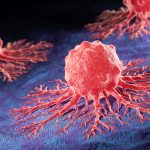
 Publication Date: 2 January 2026
 Publication Date: 19 December 2025